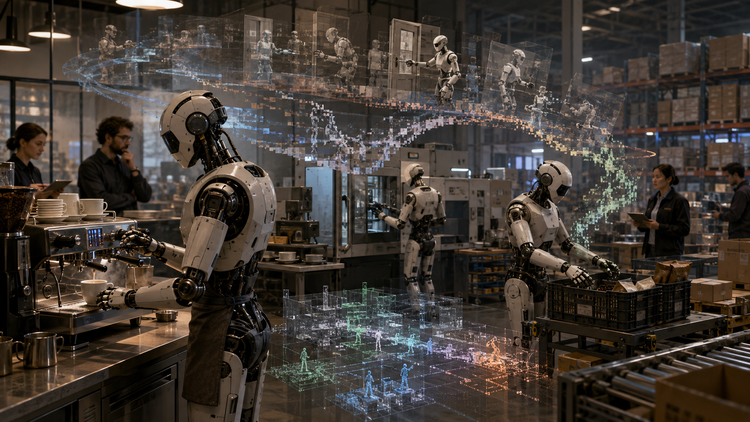
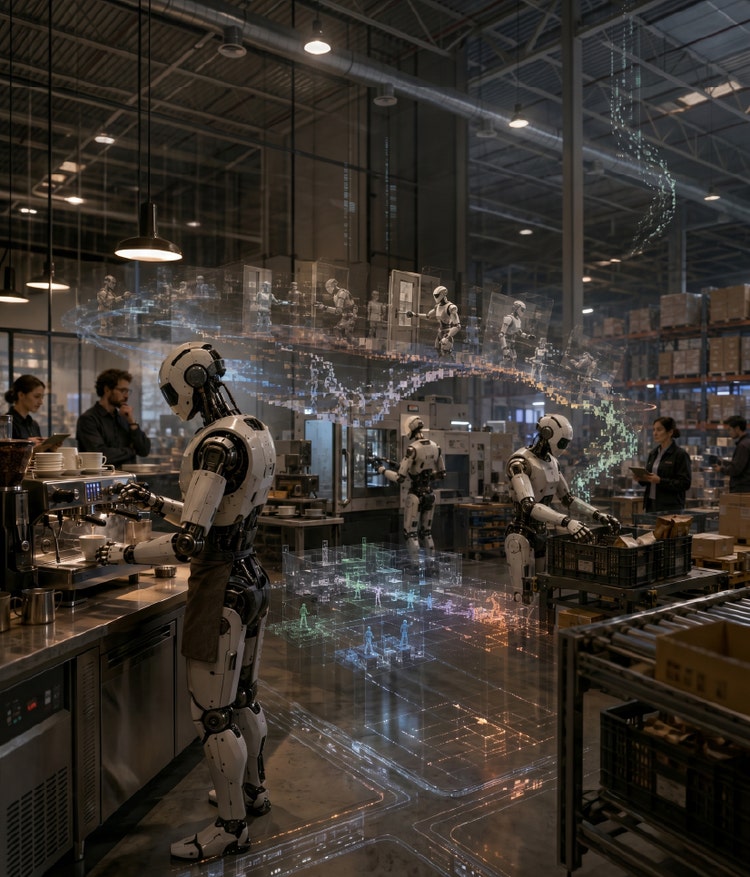
the robots are getting good. in the last ninety days alone, a foundation model operated an appliance it had never seen in training. another ran a commercial espresso machine autonomously for thirteen hours straight.
and yet most robotics deployments still fail quietly, in the gap between what a robot can do in a lab and what it can do reliably in production. the narrative says this is a data and training problem. the evidence suggests something else.
three camps are building physical AI right now. real-world data, simulation, foundation models. they're becoming layers of the same stack. the question is who owns the layer where it all comes together.
part 1: teaching robots with the real world
what 'real-world data' actually means across the companies building it, and why the supplier tier is consolidating faster than most people expect.
part 2: more data won't fix this
why the bottleneck isn't data volume. normalisation, indexing, and observability matter more. and why three alternative approaches have emerged in parallel.
how the three camps converge into a single stack, and why the eval-and-deployment flywheel emerges as the defensible moat.